The Real Cost of Mismanaging a Wine Cellar
Madeleine Cruickshank
October 26, 2025 · 6 min read

What does it actually cost to mismanage a wine cellar?
The cost shows up in three places: bottles that spoil or pass their drink window unnoticed, denied or underpaid insurance claims from incomplete documentation, and the ongoing stress of not actually knowing what you own. None of these require a disaster to add up; they happen quietly, one overlooked bottle at a time.
Spoilage and Missed Drink Windows
A cellar without accurate records is a cellar where bottles get forgotten. Wine bought with good intentions to open at the right moment often ends up pushed to the back of a rack, only to be rediscovered well past its peak, or not discovered at all until it's no longer enjoyable.
This is less about total loss and more about lost value: a wine opened years past its ideal window rarely delivers what it would have at the right time, which means the money spent on it didn't buy the experience it was meant to.
Insurance and Documentation Gaps
Incomplete inventory records are a common reason wine-related insurance claims get denied or underpaid. Without documentation of what you owned, its condition, and its value, a claim after a loss (a failed cooling system, a flood, a theft) becomes a matter of reconstructing memory rather than presenting evidence.
This is one of the more preventable costs on this list. A current, exportable inventory with purchase details and valuation doesn't just help after a loss, it also makes a claims process considerably faster and less stressful when it's already the worst part of your week.
Overbuying and Wasted Spending
Without a clear view of what you already own, it's easy to buy duplicates or simply accumulate more wine than you can realistically drink within a reasonable window. This isn't spoilage in the traditional sense, but it's still money spent on bottles that end up sitting indefinitely rather than being enjoyed, which is its own quiet form of waste.
How do you know if your cellar has grown past what you can manage manually?
If you can't confidently list what you own without physically checking, or you've bought a bottle you already had without realizing it, your collection has likely outgrown manual tracking. This tends to happen somewhere between 30 and 50 bottles for most collectors.
The Cost of Not Knowing What You Have
Beyond the financial side, there's a real cost to the experience of collecting itself. A disorganized cellar creates decision fatigue: staring at a rack, unsure what's actually good to drink tonight, unsure what you're saving for later, and unsure what you've forgotten entirely. That friction turns what should be an enjoyable part of collecting into a source of low-grade stress.
How Proper Tracking Prevents These Costs
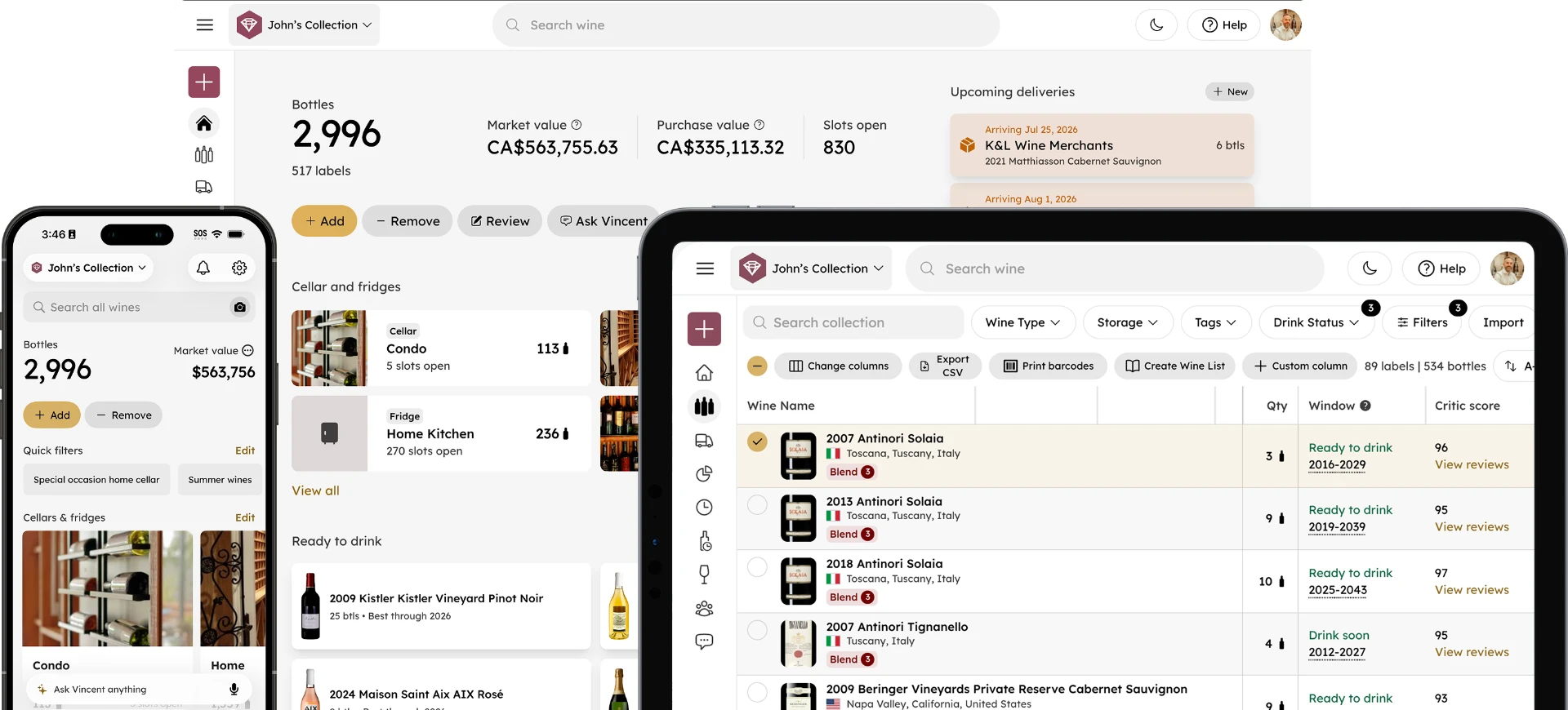
Accurate drink windows prevent spoilage. Knowing which bottles are approaching or within their optimal window means you actually drink them at their best, rather than discovering them too late. InVintory's Ready to Drink feature surfaces this automatically, so you're not relying on memory or guesswork.
Exportable records protect you if you ever need to file a claim. A documented inventory with valuation and purchase details, kept current rather than reconstructed after the fact, makes an insurance claim dramatically more straightforward.
Visibility into what you own prevents overbuying. Being able to actually see your full collection at a glance, rather than a rough mental estimate, makes it much easier to buy deliberately instead of duplicating what you already have.
A visual, organized cellar reduces the daily friction of collecting. VinLocate turns "where did I put that" into a search you can answer in seconds, which matters as much for enjoyment as it does for organization.
How These Costs Compound Over Time
The costs above rarely show up all at once. They build gradually, which is part of what makes disorganization easy to ignore until it's a genuinely expensive problem.
In the short term, a disorganized cellar mostly costs you convenience: a bottle you can't find, a duplicate purchase, a minor annoyance. These are real but individually small.
Over a few years, the pattern compounds. A handful of forgotten bottles becomes a section of the cellar nobody has looked at properly in a long time. Small overbuying decisions add up to a meaningfully oversized collection relative to what you actually drink. Missed drink windows across dozens of bottles start to represent real money spent on wine that never delivered its intended experience.
Over a decade or more, especially for larger or higher-value collections, the compounding costs get serious: an aging cellar with no clear documentation becomes genuinely difficult to insure, value, or pass on, whether that's to family, an estate, or a sale. At that point, reconstructing accurate records from memory or scattered notes is a significant project in itself, one that's far easier to avoid than to fix retroactively.
This is the core argument for getting organized early rather than waiting until a collection feels unmanageable. The cost of maintaining good records as you go is small and constant. The cost of reconstructing them after years of neglect is large and concentrated, usually arriving at the worst possible time, like after a loss, during a move, or when settling an estate.
Getting Ahead of These Problems
The good news is that none of this requires a complete overhaul to fix. Start by cataloging what you currently own, set up drink window tracking so nothing else slips past its peak, and build the habit of logging new purchases and consumed bottles as you go rather than batching it later. For a full walkthrough of building this system from scratch, see our guide to organizing a wine collection.
If your storage itself is part of the problem, an aging or poorly maintained wine fridge can compound these costs directly. See our guide to how long wine fridges last and the warning signs of failure, and if you're dealing with a heat wave right now, our guide to wine storage in summer heat.
A cellar you can't see clearly is a cellar you can't fully protect, financially or otherwise.
Want to stop discovering problems after they've already cost you?
See How InVintory Keeps Your Cellar Organized →
FAQ
What's the most common cost of a disorganized wine cellar?
Missed drink windows are usually the most common and most avoidable cost, since they happen quietly and repeatedly rather than as a single dramatic event.
Does cellar disorganization actually affect insurance claims?
Yes. Incomplete documentation of what you own, its value, and its condition is a common reason claims get denied or underpaid after a loss. Current, exportable records meaningfully reduce that risk.
How many bottles before a cellar becomes hard to manage manually?
Most collectors start feeling the strain somewhere between 30 and 50 bottles, when it becomes difficult to recall the full collection from memory alone.
Can I fix a disorganized cellar without starting completely over?
Yes. Cataloging your current collection, setting up drink window tracking, and committing to logging changes going forward is generally enough to get ahead of most of the costs discussed here, without needing to overhaul anything physically.
Ready to get your cellar organized before it costs you anything else?