Can You Leave Wine in a Hot Car? Safe Transport
Madeleine Cruickshank
July 16, 2026 · 5 min read
A bottle that's perfectly stored at home can still get cooked in a car trunk, a delivery truck, or a suitcase. Summer travel and summer shipping both put wine through conditions it was never meant to handle. Here's how to move wine safely, whether you're driving it, flying with it, or waiting on a delivery.
Is it safe to leave wine in a hot car?
No. A parked car can reach well over 100°F within minutes on a warm day, far past the point where wine starts to degrade. Even a short errand is enough to affect delicate wines if the car has been sitting in direct sun.
Road Trips and Car Transport
If you're driving with wine in summer, keep it in the main cabin with air conditioning running rather than the trunk, which heats up faster and holds heat longer. An insulated wine bag or a soft cooler with an ice pack adds a real buffer for longer drives.
Avoid leaving wine in a parked car for more than a few minutes, even with the windows cracked. If you're stopping for a meal or an errand, bring the wine inside if there's any reasonable way to do it.
If you're moving a meaningful number of bottles by car, such as relocating part of a collection between a home and a second property, treat it like a short-term storage problem rather than a quick errand. A portable 12-volt wine cooler, the kind designed to plug into a car's power outlet, holds temperature far better than a standard cooler with ice over a multi-hour drive.
Flying With Wine
Pack bottles in checked luggage rather than a carry-on, since liquids over the standard limit aren't allowed through security. Use a padded wine travel case or wrap bottles individually in clothing inside a hard-sided suitcase to protect against both temperature swings and breakage.
Cargo holds are pressurized and temperature-controlled to a reasonable range, so flying is generally safer for wine than a hot car, but bottles can still experience pressure changes that occasionally push a cork slightly. Check bottles for leakage after arrival before storing them long-term.
If you're traveling internationally with wine you plan to keep, check customs rules in advance. Requirements vary by country and can affect what you're allowed to bring back, including duty-free allowances and documentation for higher-value bottles.
Shipped Wine and Summer Deliveries
En primeur orders, club shipments, and online wine purchases are all more vulnerable in summer, since they may sit on a truck or a porch for hours in the heat before you're home to bring them in.
If a shipment is scheduled to arrive during a stretch of hot weather, try to arrange delivery for a day you'll be home, or ask about heat-protective packaging if your retailer offers it. Refrigerate or move a delivered case to proper storage as soon as possible rather than letting it sit at room temperature.
How do you keep track of wine that's still in transit?
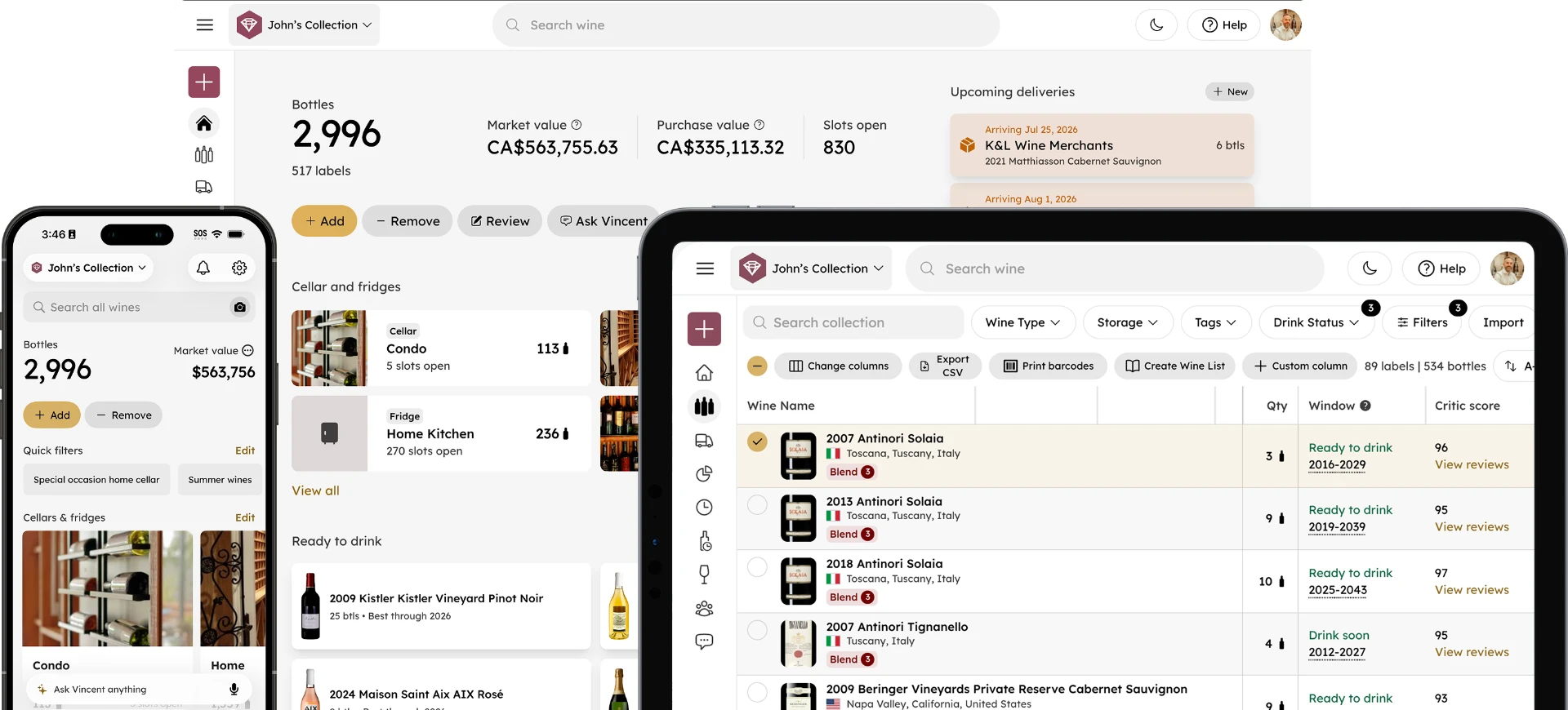
InVintory's Deliveries feature lets you log incoming shipments and set expected arrival dates, so you get a reminder to bring a case in promptly rather than finding it on the porch after a hot afternoon. Once a delivery arrives, you can add its bottles to your collection with a single tap.
Start tracking your wine deliveries with InVintory.
Protecting High-Value Bottles in Transit
For bottles significant enough to matter for insurance purposes, keep a record of what's traveling, when, and how, separate from your general collection notes. If a bottle is ever damaged in transit, a documented value and provenance record makes any insurance claim considerably more straightforward than trying to reconstruct the details afterward.
This matters most for auction purchases, en primeur allocations, or anything moving between a primary residence and a vacation property, since these are the shipments most likely to sit unattended during the hottest part of the day.
Vacation Prep: Leaving Your Collection Behind
If you're heading out of town for an extended stretch in summer, don't just assume your wine fridge will keep running fine unattended. Check that your unit's cooling system has been reliable recently, and if you have smart sensor monitoring set up, confirm you'll get alerts on your phone rather than only a local alarm you won't hear while away.
If your storage is in a space that gets hot when the air conditioning is off or turned down for the trip, such as a garage or an unused room, consider whether it makes sense to adjust the thermostat schedule rather than letting that space heat up unmonitored for a week or two.
After a Trip or a Hot Delivery
If a bottle has been through a heat stress event, whether that's a car trip, a delayed flight, or a shipment left outside, it's worth tasting it sooner rather than holding it for a special occasion. Heat-stressed wine doesn't necessarily go bad, but it also isn't likely to improve with more time in the cellar.
Logging where and how a bottle traveled, along with any signs of stress, makes it easier to make that call later instead of guessing.
Ready to track your deliveries alongside the rest of your collection? Get started with InVintory free or explore Premium and Elite plans.
FAQ
How long can wine safely sit in a hot car?
There's no fixed safe window; even 15 to 30 minutes in direct summer sun can raise interior temperatures enough to stress delicate wines. If you can avoid it, don't leave wine in a parked car in summer at all.
Is checked luggage safe for wine when flying?
Generally yes, since cargo holds are temperature-controlled within a reasonable range. Pack bottles securely to protect against breakage and pressure changes, and inspect them for leaks after your flight.
What should I do if a wine delivery sat outside in the heat?
Bring it into proper storage as soon as possible and let it rest for a few days before opening. If you notice a pushed cork or visible seepage, plan to drink it sooner rather than holding it long-term.
Do I need travel insurance for a valuable wine shipment?
For high-value bottles, it's worth checking whether your homeowner's or a specialty collector's policy covers wine in transit, since standard shipping insurance from a retailer often has low per-bottle caps.